

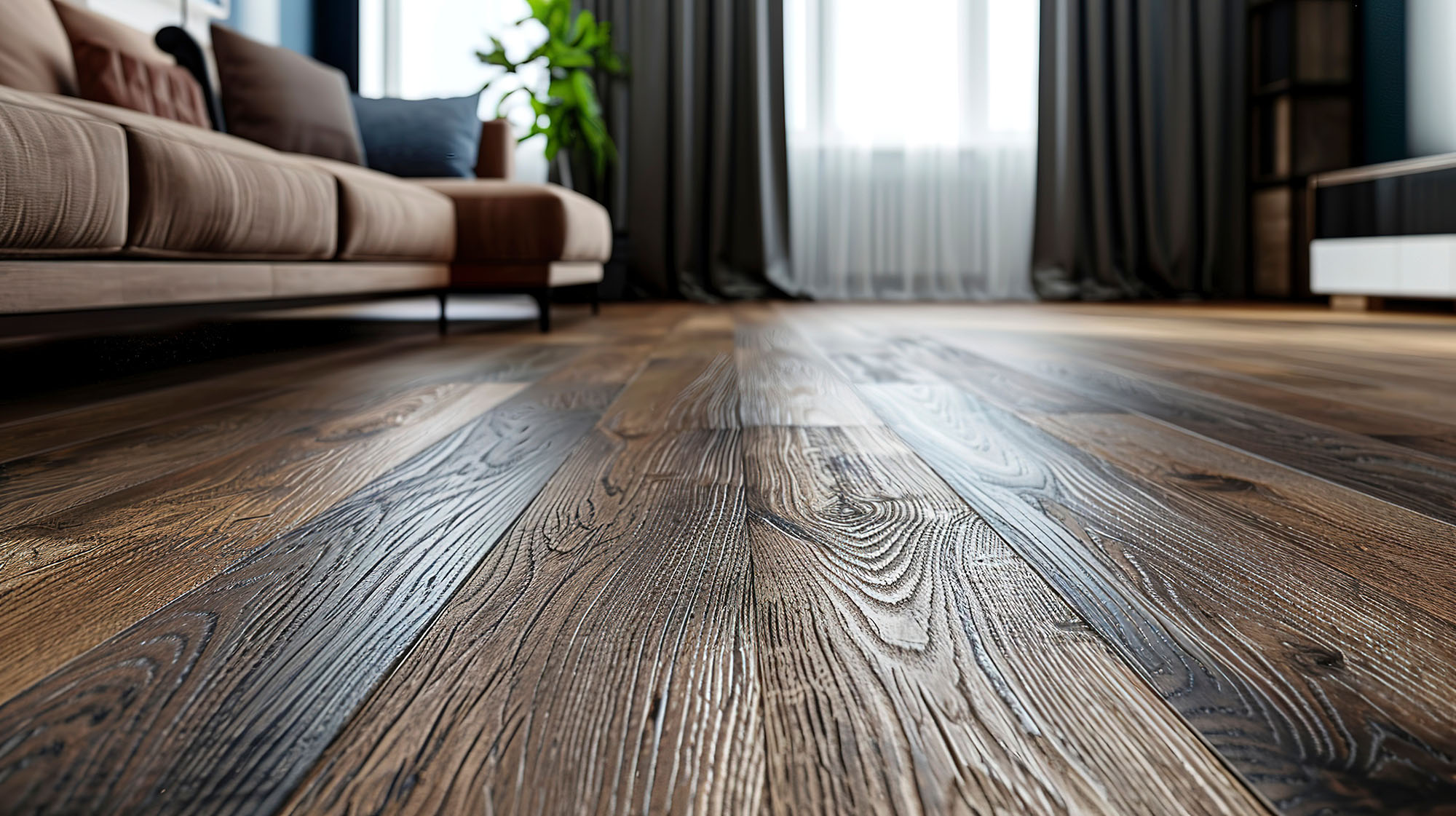
Hardwood floors can change shape when moisture conditions inside a home become unbalanced. You might notice board edges rising above the center, creating a rippled appearance, or see the middle of each plank sitting higher than its edges. These problems are known as cupping and crowning. Although they can look similar at first glance, they have different causes and may require different repairs.
Understanding the difference is important because sanding a hardwood floor before correcting the underlying moisture problem can make the damage worse. Whether the issue appears after a plumbing leak, a humid summer, or a recent residential flooring installation, identifying the source should always come first.
What Is Hardwood Floor Cupping?
Cupping occurs when the edges of individual hardwood boards rise higher than their centers. Looking across the floor, you may notice shallow channels or a series of small waves following the direction of the planks.
The most common cause is uneven moisture exposure. When the underside or lower portion of a board absorbs more moisture than the top, the wood expands unevenly. The greater expansion underneath can force the edges upward.
Common causes include:
Moisture beneath the floor: Water vapor from a concrete slab or damp crawl space can affect the underside of hardwood.
Plumbing leaks: A leaking pipe, dishwasher, refrigerator line, or nearby fixture may introduce moisture.
High indoor humidity: Prolonged humidity can contribute to moisture absorption, especially when ventilation or climate control is inadequate.
Wet cleaning practices: Excessive water from mopping can penetrate seams and contribute to moisture imbalance.
Insufficient moisture protection: An inappropriate or missing moisture-control system may allow moisture to affect the flooring.
Cupping does not automatically mean the hardwood is permanently ruined. If the moisture source is corrected promptly, some boards may gradually return toward their original shape as they dry.
What Is Hardwood Floor Crowning?
Crowning is the opposite pattern. The center of a hardwood board rises higher than its edges, creating a rounded or slightly raised appearance. One possible cause is prolonged moisture exposure followed by drying from the underside. As the board changes shape, the center may become higher than the edges. However, crowning can also result from an earlier cupping problem that was sanded before the moisture conditions were corrected.
This distinction matters. Imagine a floor that cups during a humid period. Someone sands the raised edges while the boards are still swollen. Later, the wood dries and contracts. The previously lowered edges may then sit below the center, producing a crowned appearance.
Other contributing factors can include uneven drying, moisture changes between the top and bottom of the boards, and installation conditions that allow persistent moisture imbalance. Crowning should not be treated as a purely cosmetic issue. It is important to determine whether the floor is still changing shape before attempting repairs.
Cupping vs. Crowning: How to Recognize the Difference
The easiest way to distinguish the two is to look across the surface of an individual plank. A straightedge placed across a board can help reveal the shape, but a visual inspection alone cannot establish the moisture source. Also consider where the problem appears. Damage near a dishwasher or exterior door may suggest localized moisture exposure. Widespread changes across several rooms could indicate a broader humidity, subfloor, or ventilation issue.
How to Find the Underlying Cause
Before choosing a repair, investigate the conditions affecting the floor. A flooring professional may begin by checking indoor temperature and relative humidity, examining the boards, and measuring moisture content in the hardwood and subfloor.
Concrete installations require particular attention. Moisture vapor can move through a slab even when its surface looks dry. A proper evaluation may include slab moisture testing and inspection of any moisture-control system used during installation.
For wood subfloors, the inspection may focus on crawl space ventilation, plumbing, leaks, and the condition of the material beneath the flooring. Homeowners can take several useful precautions:
Check for plumbing leaks and damp areas around appliances.
Keep indoor humidity within the flooring manufacturer's recommended range.
Use air conditioning or dehumidification when needed.
Avoid soaking hardwood during routine cleaning.
Investigate musty odors, discoloration, or unexplained dampness promptly.
Do not rely on a single moisture reading. Conditions can vary from room to room and change with the weather.
Can Cupped or Crowned Hardwood Floors Be Repaired?
Repair depends on the extent of the damage, the source of moisture, and whether the boards have stabilized. The first step is always moisture correction. Repairing a leak, improving ventilation, or addressing slab moisture may prevent additional damage. The floor then needs time to adjust to more stable conditions. Some boards flatten naturally, while others retain permanent distortion.
Sanding may be appropriate when the wood has dried and measurements confirm that conditions are stable. Sanding too early can remove material unnecessarily and create an uneven surface later. Severely damaged boards may require replacement. Professional assessment is especially important when the floor has widespread deformation, loose boards, persistent moisture, or signs of subfloor damage.
Protect Your Hardwood Before Problems Develop
Cupping and crowning are signs that something has disrupted the moisture balance in a hardwood floor. Recognizing the difference helps narrow down possible causes, but correcting the underlying conditions is what protects the floor over time.
Proper preparation and moisture testing during residential flooring installation can reduce the risk of future problems. The specialists at R&S Flooring can help evaluate hardwood flooring concerns and discuss appropriate next steps. Contact the team to arrange a consultation, and visit our showroom in Brentwood, and Nashville, TN to explore hardwood options and learn how suitable product selection and installation practices support lasting performance.